

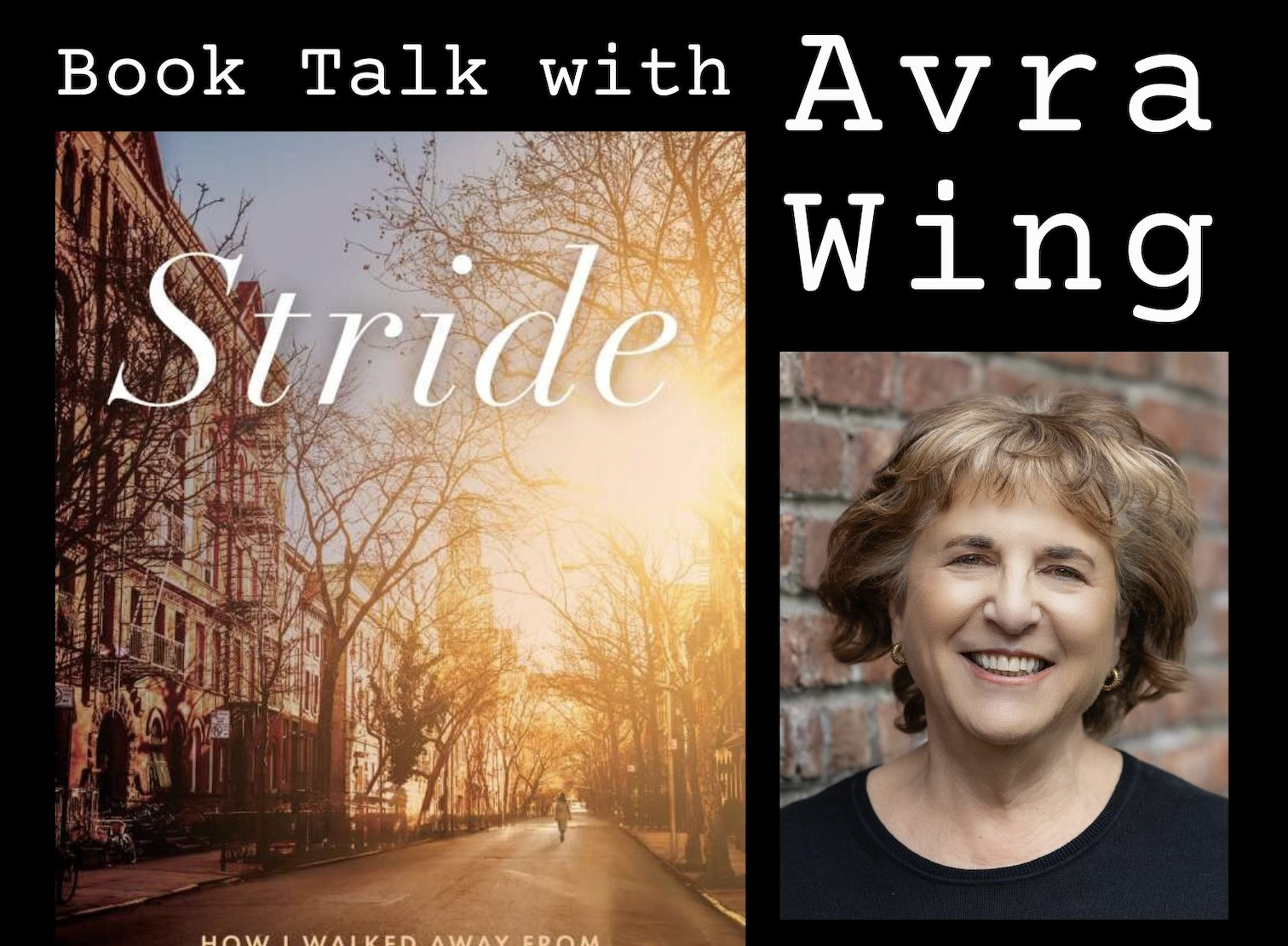
Stride: How I Walked Away from Trauma Toward Healing
Reading and Discussion with Avra Wing
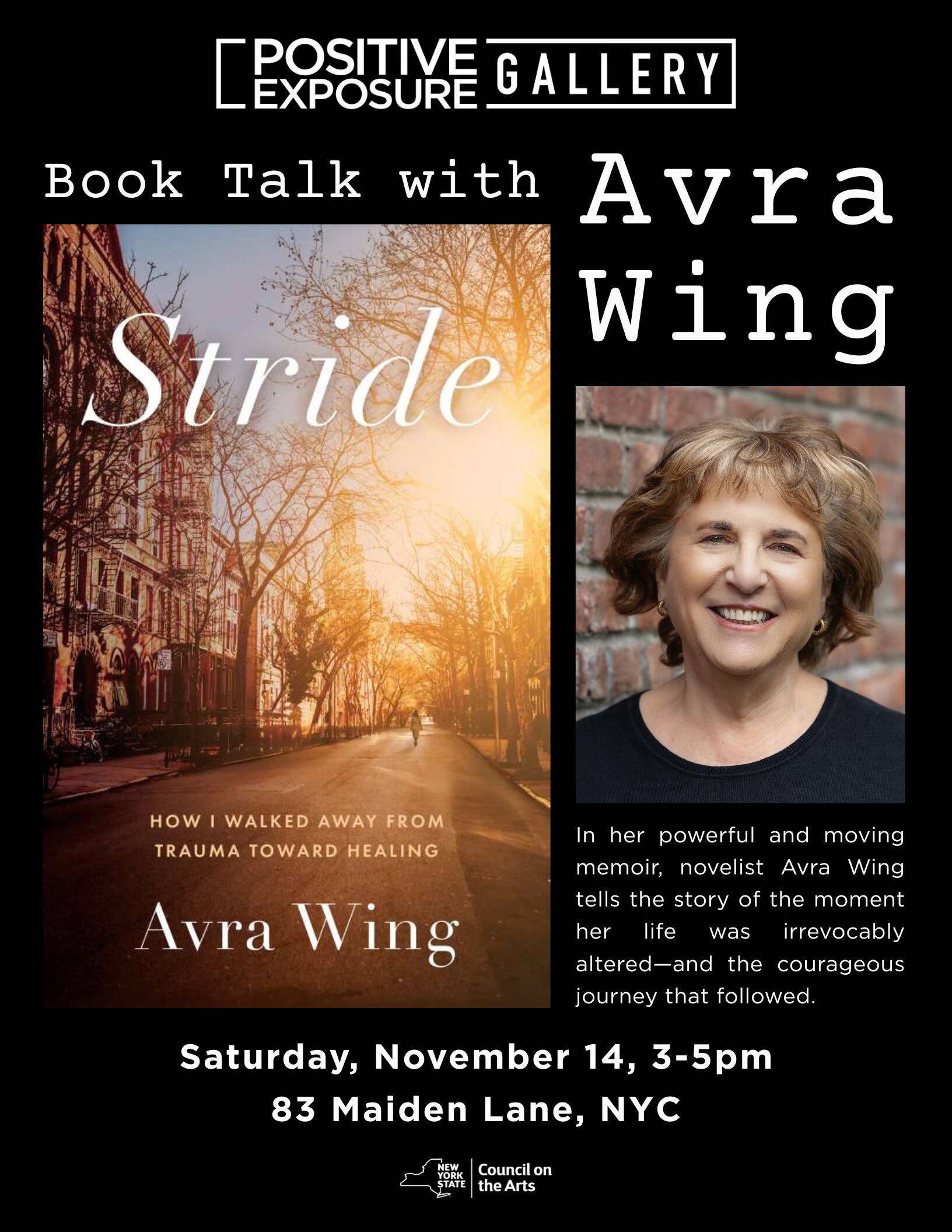
Stride: How I Walked Away from Trauma Toward Healing
A Memoir of Survival, Love and Healing
In her powerful and moving memoir, Stride: How I Walked Away from Trauma Toward Healing, novelist Avra Wing tells the story of the moment her life was irrevocably altered—and the courageous journey that followed.
On a quiet day in Park Slope, Brooklyn, an out-of-control car jumped the curb and struck Wing as she strolled with her three-year-old son, Eli. In a split second, she shielded her child from harm, saving his life. Wing’s own injuries, however, were catastrophic: her right leg required amputation above her knee, and she spent weeks recovering at Bellevue Hospital and then months relearning how to walk at Rusk Institute.
At the time, Wing was a rising literary voice. Her debut novel, Angie, had been adapted into a feature film starring Geena Davis and James Gandolfini. After the accident, everything changed. In the early days of recovery, she questioned whether she wanted to go on at all, veering from despair to denial of her changed body. But she was sustained by the fierce love of her husband and their two sons, and the community she found at Rusk Institute.
In Stride, Wing writes with great honesty about trauma, identity, and the long path toward self- acceptance: “Right after my accident,” she writes, “I was not thinking about what it meant to be disabled. I was focused on being disfigured … I saw my injury as a manifestation of something interior that was ‘off,’ wrong, ugly—a feeling I have had since childhood.”
Yet Stride is also a story of strength passed across generations. Wing recalls her beloved grandmother, who lost her sight to glaucoma yet lived with independence and dignity after emigrating from Belarus. As a child, Wing never thought of her as limited: “She was proud, intelligent, capable, caring . . . In fact, when I was little, I thought all grandmothers were blind.”
In Stride, Wing shows how she struggled to parent her two young sons and the decision to adopt a child from China years later. Ultimately family love sustained her as did community and creativity.
For more than a decade, Wing has led a writing workshop at Center for Independence of the Disabled in New York City, where participants with a wide range of disabilities create expressive work each week. Through these connections—and through unexpected sources of joy, like Zumba classes offered by NYU Langone Health’s Initiative for Women with Disabilities—she began to recognize her body not as broken, but as capable of movement and expression. Stride is a testament to the human capacity to endure pain and find meaning after terrible loss.
About the Author
Avra Wing is a novelist and teacher whose debut novel, Angie, was adapted into a feature film starring Geena Davis and James Gandolfini. She has led writing workshops for people with disabilities since 2009 and is a passionate advocate for creative expression as a path to healing. She has three adult children and lives with her husband and cats in Brooklyn.
ADVANCE PRAISE
“Drawing on witness accounts, police records, and medical files in addition to Wing’s own memories, this account of the accident, the surgery, and the recovery period is visceral and comprehensive. Psychiatric insights are also used to articulate the extended psychological trauma of losing a limb and Wing’s feelings of shame and disfigurement. The self-aware prose untangles months of denial without sentimentality.” —Michele Sharpe, Foreword Reviews
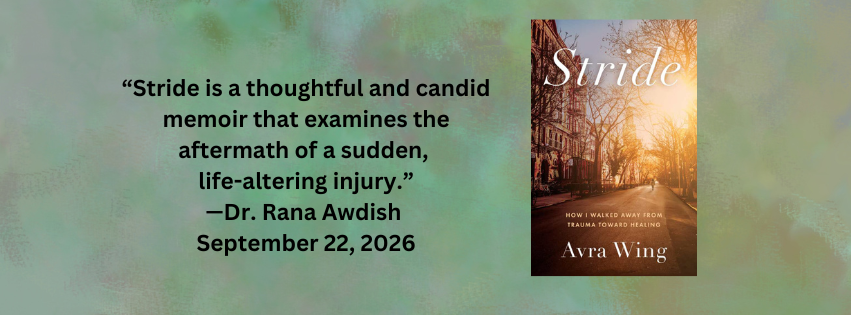
“Stride is a thoughtful and candid memoir that examines the aftermath of a sudden, life-altering injury. Avra Wing resists a conventional ‘overcoming adversity’ narrative . . . Her reflections on embodiment, identity, and visibility are particularly compelling . . . a reflective and engaging read, especially for those interested in the lived experience of illness and recovery.” —Dr. Rana Awdish, bestselling author of In Shock: My Journey from Death to Recovery and the Redemptive Power of Hope and the forthcoming After Shock.
“Stride is . . . layered with hard-won insight, grace, and wisdom for the ages—and for the moments right in front of us. . . . Her voice is so engaging that you feel that if you met her, you could pick up the conversation she has with herself and the reader and talk long into the night.” —Elizabeth Benedict, author of Rewriting Illness: A View of My Own